
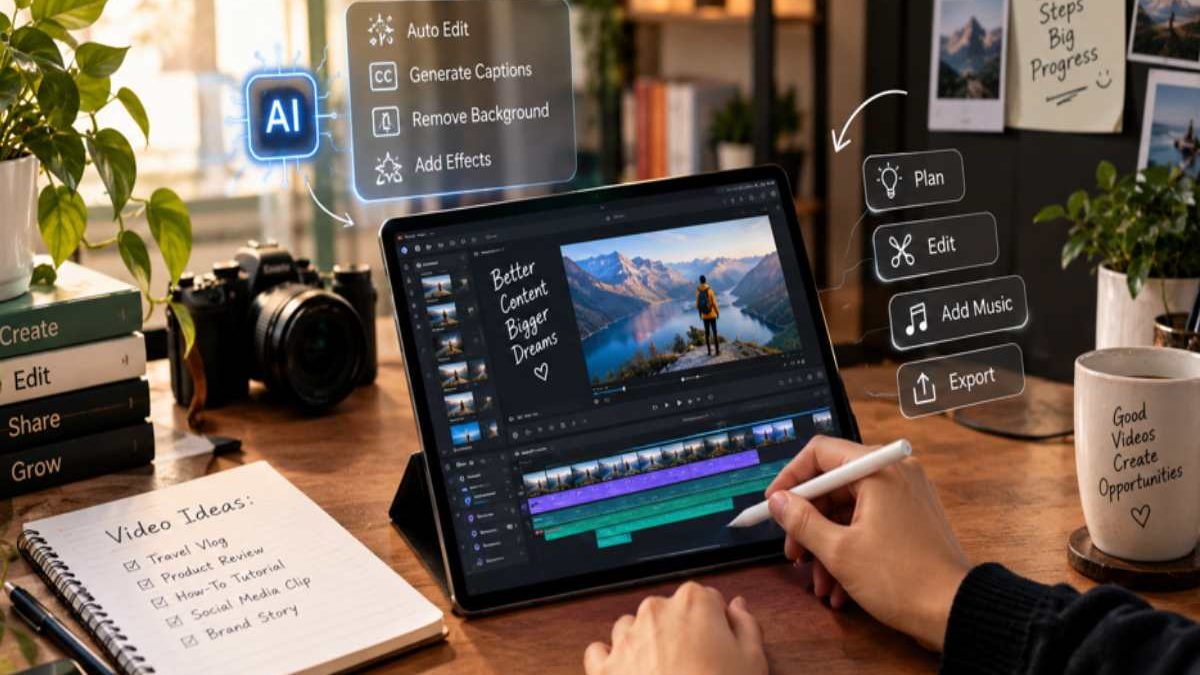
Creating a professional video entails more than just gathering quality footage. Video post-production necessitates that editors go through the recorded footage, choose the good and discard the bad, arrange scenes in proper sequence, add words and sound, etc. In the era of continuous need for fresh content this means a lot of work. AI-enhanced editing tools lead creators toward a more efficient approach at this stage. Creative people can eliminate repetitive tasks by using smart technologies instead of utilizing most of their time on simple actions.
Table of Contents
From Raw Footage to a Clear Story
One of the biggest obstacles in film production is creating a narrative from a few different shots. The raw footage may contain lots of valuable moments in addition to repeated shots, long pauses, mistakes, or parts that do not contribute to the final message.
AI can help make this task easier. It can analyze available material and complete specific tasks, helping to identify what is important. Consequently, it provides a framework for further work. The result is often not a completed video, but a rough draft that the editor can change afterwards.
Natural Language Makes Editing More Accessible
Regular editing applications provide many different features, but it can be difficult to learn how to use everything. Beginners who are really clear about what they want their video to look like may not know how to use the technology needed to achieve that. Natural language interaction might be another way of doing editing. Instead of limiting themselves to commands and menus, users can describe what they want in their common speech.
For example, an AI video editor with ChatGPT can help connect a creator’s instructions with the editing process. An individual may specify the goal of the project, highlight relevant clips, or comment on how parts should be arranged. AI can help the creator initially line everything up so they have something to evaluate. This method helps to make it easier to begin the editing process while still maintaining the input and involvement of the creator.
Faster Editing Without Losing Creative Control
It should be noted that the value of automation manifests itself primarily in less creative activities. Activities that involve human effort, such as sorting clips or creating captions, take a lot of time to perform.
Once some tasks are automated, writers and creators will be able to focus on other activities requiring human participation. They can select a rhythm of cutting, set a visual style of a work, or adjust the mood of a particular scene.
Effective edits do not mean that a machine does everything. AI serves as a production assistant, and the creator remains a person who makes the final decisions.
AI Can Support Different Types of Creators
AI-assisted editing helps all types of users. For instance, creators on social media can use intelligent workflows to produce short-form pieces quickly and frequently. It is possible that there is more material available than one has time to examine,e.g. any materials/videos related to their activities (such as introductions of products, tutorials, advertisements, and online promotion videos).
So using simple editing techniques makes the process of creating video content easier, allowing for successful filming of new videos. Experienced editors can take advantage of Artificial Intelligence in the initial stages because even they have to deal with a lot of work when it comes to analyzing footage and preparing scripts before the actual job begins. Automating part of this work makes the process more effective.
Better Instructions Lead to Better Results
AI may be able to help facilitate the video editing process, but the specifics of the commands given matter. In fact, when unclear commands are issued, results may take lots of editing to get to where one wants them to be. But when the instructions are more precise, the video editing process is easier.
People who create videos should pay attention to such aspects as video type, time of the video, main goal and tone of it, basic scenes included and the target audience. Also, they may name the parts of the video that need to be paid close attention to, as well as to mention segments of the footage that need to be discarded.
For instance, when preparing an educational video, the creator can task AI with creating the final part of it, which should include clear explanations, steady speed and no breaks.
Reviewing the AI-Generated Draft
Automated scripts require proper human editing prior to publishing. While AI can assist with laying out the necessary shape and components, it lacks the understanding of the feelings, brand presence, and audience expectations that the author had in mind.
Editors must, therefore, be willing to sit through the entire length of the video. They have to determine if every piece of content supports the storyline.
It is also crucial to pay attention to the audio. Background sound, sound level variations, and the wrong timing of music can seriously decrease the quality of what might otherwise be an excellent video. Therefore, it is recommended to check the audio before publishing it and fix the problems that appear.
Why the Human Element Still Matters
Using video-making technology, video communication is expressed in terms of the broadcast or delivery of information messages from one point to another. In addition to the technical accuracy of communication, important factors that define video communication include context, emotion, timing, and originality of video content.
The role of artificial intelligence can be significant in speeding up information processing and executing repetitive tasks; however, video communicators always depend on their own personal experience and creative ideas when creating video products. They are capable of understanding what makes a specific moment important and how it should be perceived emotionally by the viewers.
Thus, it could be said that the most successful video production processes that involve AI technologies combine automation and human input. While AI is skilled in the preparation of the content, it is the person who decides what to leave as is, what to change, and what to deliver to the audience.
What the Future May Bring
With the advancement of AI technology, video editing processes will probably get linked with each other more tightly. The duties that now require a number of conventional stages will get simplified with the help of natural language commands and comprehensive editing environments.
The authors will find it more convenient to go from conceptual plans to processed videos, rough edits, subtitles, and suitable versions for different platforms. However, greater automation will not eliminate the necessity of proofreading.
Rather, it will transfer the responsibilities of the editor to the area of creative authority and quality checks. Consequently, the creators will be able to spend less time doing routine tasks and focus more on coming up with original ideas.
Conclusion
AI is having an impact on changing video editing through the simplification of various processes from the moment footage is recorded to the final step of creating a finished product. AI technology enables creators to save time with the organization of the material, creation of the first sequences, and makes it possible to avoid repetitive work. The creative part remains with the filmmaker.
It is important to underline that it is necessary to avoid over-reliance on the technology. Good writing, thoughtful editing, and many stages of editing are key. Indeed, only when the technology is used merely as an assistant can it speed up your workflow in terms of saving time and energy, while people are the ones who write and create the video content.