
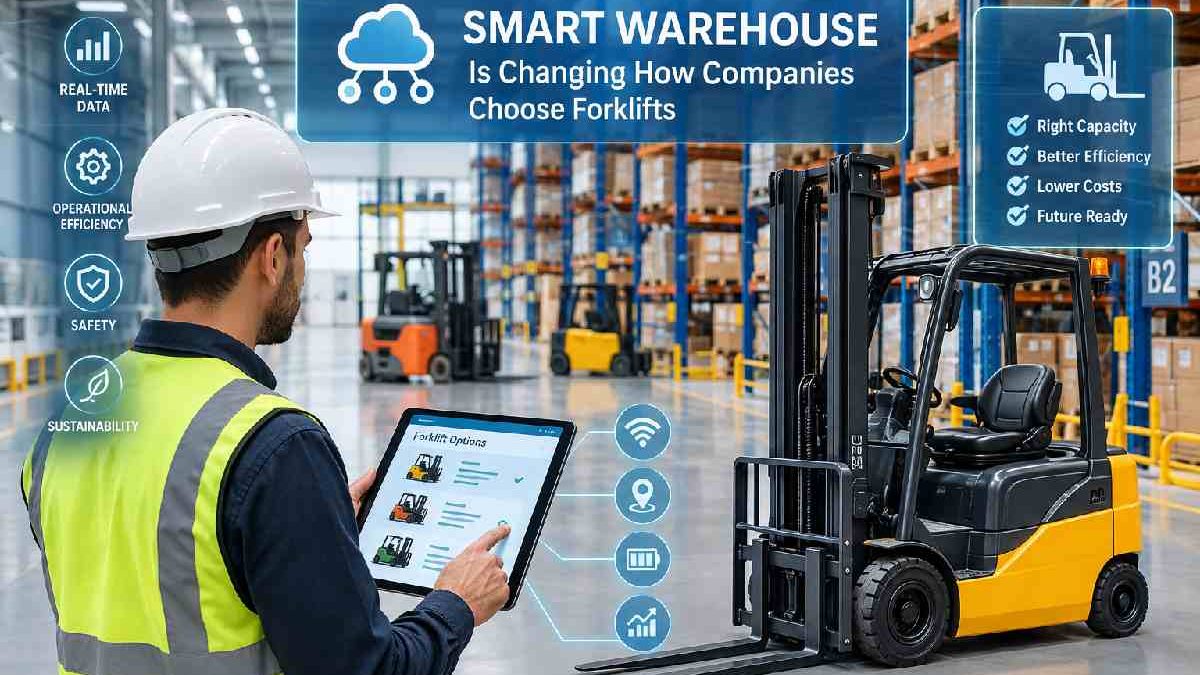
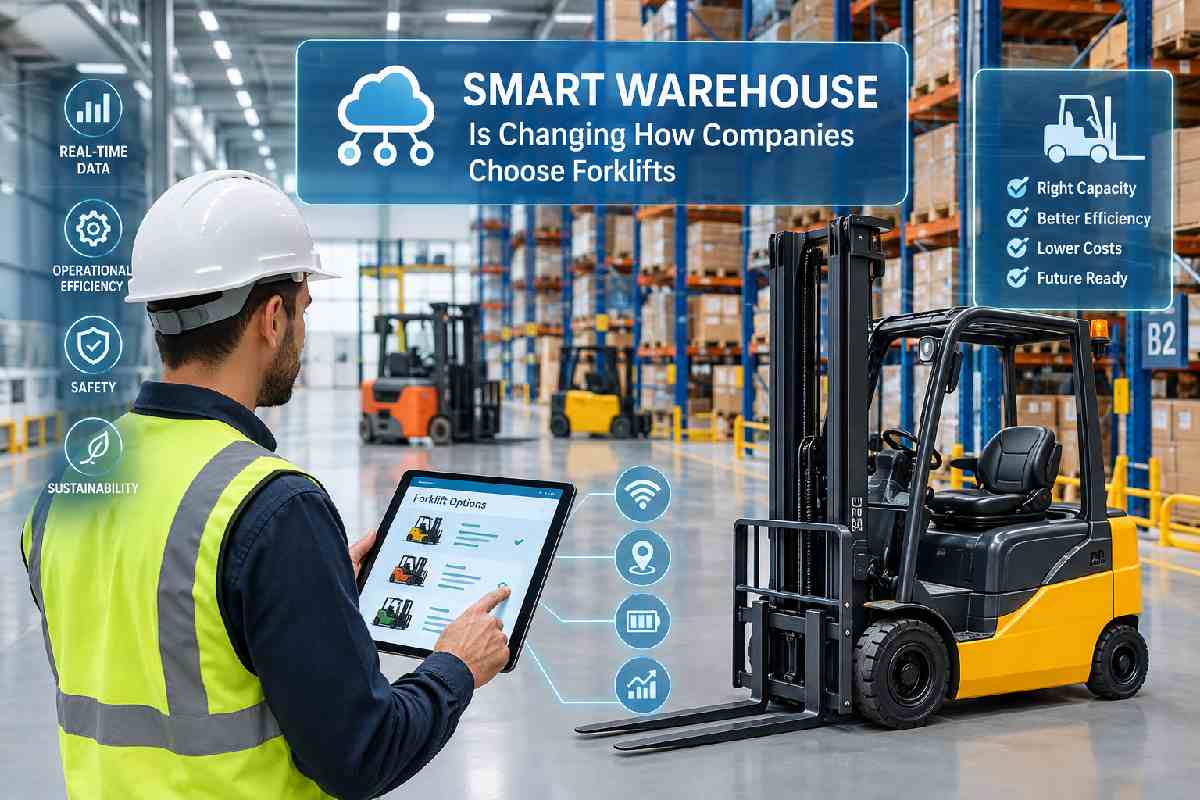
Warehouse technology has advanced rapidly. Inventory systems update in real time, sensors monitor equipment, telematics record operating data, and automation is changing the way materials move through distribution centers.
Yet one of the most important pieces of warehouse equipment is still frequently purchased using surprisingly simple criteria: price, lift capacity and brand.
That approach is becoming outdated.
As warehouses become more connected and data-driven, companies increasingly need to evaluate forklifts as part of a larger operating system. The right machine is not simply the one that can lift a pallet. It is the one that fits the facility, workload, labor model, energy strategy and technology environment in which it will operate.
Table of Contents
Start With the Work, Not the Machine
Forklift selection should begin with an operational profile rather than a model catalog.
A warehouse should know the typical and maximum load weights, required lift heights, aisle widths, floor conditions, operating hours, travel distances and attachment requirements before comparing equipment.
A machine that looks inexpensive can become costly if it is poorly matched to the job. Excess capacity can mean paying for capability that is rarely used. Too little capacity can create safety and productivity problems. A truck with the wrong dimensions can reduce maneuverability or force a warehouse to redesign traffic patterns around the equipment.
The first question therefore should not be, “Which forklift should we buy?” It should be, “What exactly does this forklift need to do every day?”
Telematics Are Turning Forklifts Into Data Sources
Modern forklifts can generate useful operational information through telematics and fleet-management systems.
Depending on the equipment and system, managers may be able to monitor utilization, operating hours, impacts, maintenance events, battery information and other performance indicators.
This changes purchasing because a forklift is no longer necessarily an isolated mechanical asset. It can become part of the warehouse’s information infrastructure.
Utilization data, for example, can reveal whether a company actually needs every truck in its fleet. Impact information can help identify locations or operating patterns associated with repeated incidents. Maintenance data can help managers understand which units are creating excessive downtime.
The result is a more measurable fleet.
Total Cost Matters More Than Purchase Price
Purchase price is highly visible. Operating cost is not.
Two forklifts with similar acquisition prices can produce very different costs over their working lives. Maintenance, energy, tires, scheduled service, parts availability, downtime and resale value can materially change the economics.
That is why buyers comparing forklifts should examine the full operating picture rather than treating the dealer quote as the final cost. Resources that help businesses compare equipment and purchasing considerations, such as ForkliftQuoteKing.com, can be useful starting points when buyers are trying to understand the variables behind a forklift decision.
A lower purchase price may still be the better choice, but only when the rest of the operating economics support it.
Downtime Has a Cost Even When It Is Not on an Invoice
When a forklift is unavailable, the cost is not limited to the repair bill.
Work may be delayed. Another truck may become overutilized. Employees may wait for equipment. Rental equipment may be required. Shipping schedules can be affected.
These indirect costs are difficult to see on a purchase order, but they matter in high-throughput operations.
This makes dealer support and parts availability important purchasing considerations. A slightly more expensive machine supported by a strong local service network can sometimes create lower operational risk than a cheaper unit that is difficult to repair.
Electric Equipment Changes the Infrastructure Calculation
The growth of electric forklifts adds another dimension to equipment planning.
An electric forklift decision is also an energy and infrastructure decision.
Facilities need to consider charging locations, electrical capacity, operating schedules and the amount of time equipment is available for charging. Battery technology and duty cycle also matter.
A warehouse operating one shift has different requirements from a facility running continuously.
The correct analysis therefore extends beyond the truck itself. Managers need to understand how the equipment will interact with the building and the operating schedule.
Automation Does Not Make Conventional Forklifts Irrelevant
Automated guided vehicles, autonomous mobile robots and increasingly sophisticated robotic systems are changing material handling.
That does not mean conventional forklifts suddenly disappear.
Many facilities have mixed workflows. Some movements are repetitive and predictable enough for automation, while others still require flexible human-operated equipment.
The more realistic near-term model for many warehouses is a mixed fleet in which automation handles selected tasks and conventional equipment handles exceptions, loading, unloading and less predictable movements.
This makes fleet planning more important, not less important.
Ergonomics and Visibility Affect Productivity
Technology discussions can make it easy to overlook the operator.
Seat design, controls, visibility, vibration, entry and exit, steering effort and cabin layout can affect the person using the equipment for hours at a time.
Poor ergonomics can contribute to fatigue. Limited visibility can make precise material handling more difficult.
Operator feedback should therefore be part of the equipment evaluation process. A specification sheet cannot fully reproduce the experience of using a truck throughout a normal shift.
Used Equipment Requires a Different Kind of Due Diligence
Used forklifts can offer substantial value, but age alone is a poor measure of condition.
Operating hours, maintenance history, application history and physical condition matter. A relatively young forklift that worked in a demanding environment may have experienced more wear than an older machine used intermittently.
Buyers should inspect the mast, forks, tires, hydraulics, steering, brakes and other critical systems and review available maintenance records.
For electric equipment, battery condition deserves particular attention because battery replacement can materially affect the economics of an apparently inexpensive machine.
The Fleet Should Be Reviewed After the Purchase
A forklift purchase should not end the analysis.
Once equipment is operating, companies can compare actual utilization and costs with the assumptions that justified the purchase.
Are trucks being used as frequently as expected? Are certain units producing more maintenance events? Are operators consistently choosing one machine over another? Is the fleet larger than necessary?
Telematics and maintenance records can turn these questions into measurable management decisions.
A company may discover that it needs fewer trucks, a different equipment mix or different replacement intervals.
The Better Buying Model Is Becoming More Analytical
The warehouse of the future will contain more software, sensors, automation and connected equipment. Forklifts will operate inside that environment rather than separately from it.
That changes what it means to choose the right machine.
Capacity and purchase price will remain important, but they are only part of the decision. Utilization, serviceability, energy infrastructure, ergonomics, data capabilities, downtime and integration with the rest of the operation increasingly matter as well.
The smartest forklift purchase is therefore not necessarily the cheapest machine or the one with the most technology.
It is the equipment that best fits the work—and produces the strongest operational result over its useful life.