
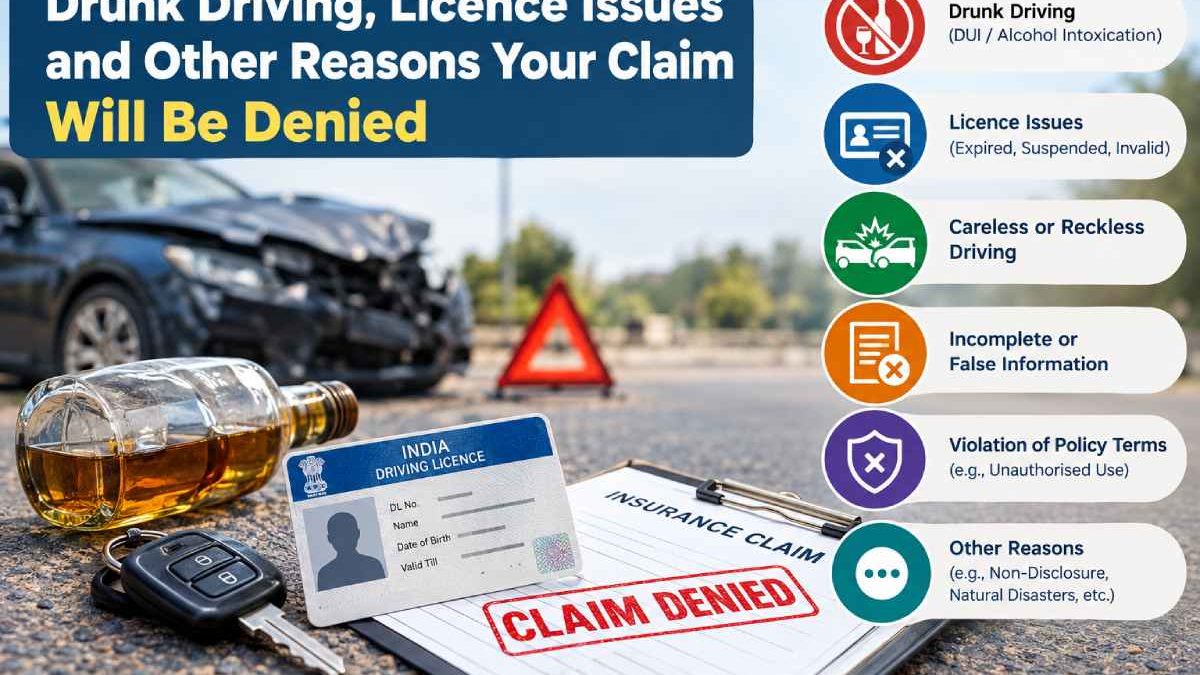
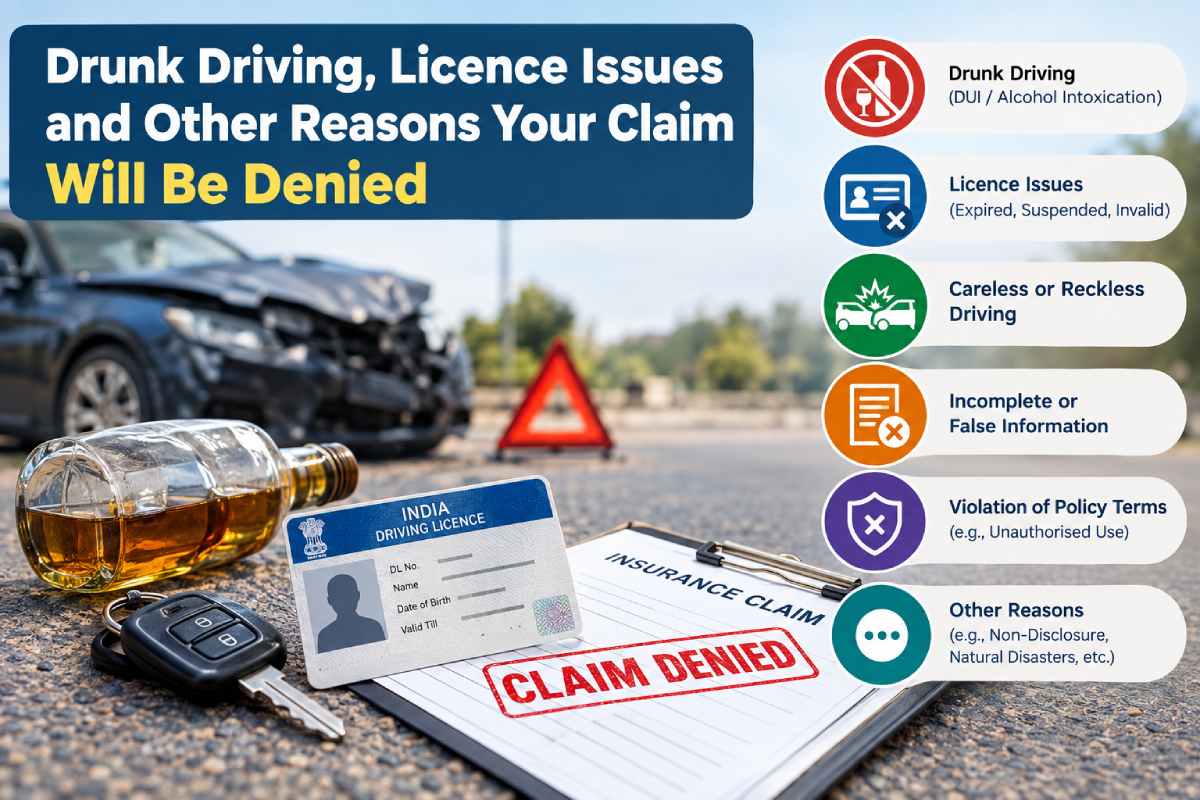
Three weeks after the accident, the garage calls. Repairs are finished, the insurer has said no, and a bill of ₹2.1 lakh is now yours. Nobody warned you that your insurance claim will get rejected because of a rule hidden deep in the policy documents that you haven’t read.
Rejections rarely arrive out of nowhere. Almost every one traces back to a rule broken before the crash, often without anyone meaning to.
Just telling you to “drive carefully” doesn’t help once an accident has happened. Here are the specific reasons insurers reject claims and how they end up costing you money.
Table of Contents
What Does the Law Say About Drinking and Driving?
According to the law, if a person has more than 30 milligrams of alcohol in 100 millilitres of blood, then he is considered drunk, and it is illegal. Even if you feel okay to drive, going over this limit means you have broken the law.
Your policy draws a line in the same place, and enforces it more strictly than most owners expect. The Supreme Court has held that a breathalyser or blood test is not compulsory before an insurer refuses a claim on this ground. Hospital notes, police records and witness statements can be enough to establish that a driver was under the influence.
One drink at a wedding, and one wet road can turn a claimable repair into a personal expenditure.
Why an Expired Licence Can Cost You Everything?
Having an expired driving licence might seem like a small inconvenience, but it isn’t.
On 30 July 2026, the Supreme Court ruled that driving without a valid licence breaks the terms of a motor policy, so the insurer will not bear the final cost.
Judges went even further and asked the government to run awareness drives on licence renewal, as most owners have no idea what a lapsed card can cost them. Renewal normally takes twenty minutes and can also be done online, so avoid skipping it.
It is important to check the expiry date on every licence in the house, then check your policy dates too. You can check car insurance online in about a minute using your registration number, which can save you time from finding it through a folder of papers that may be out of date anyway.
Reasons Nobody Mentions at the Time of Sale
Alcohol and licences account for only a share of rejected files. The rest come from ordinary decisions.
- If you lend your private car to a friend who pays you for the trip, this turns it into a commercial car, which a private policy cannot cover.
- Keep driving after an accident can make the damage worse, which insurance inspectors can easily notice.
- Getting repairs done first and informing the insurer afterwards removes any chance of assessment, and a claim nobody can inspect is a claim nobody will pay.
- Waiting itself can also weaken a file, since most policies expect you to report an accident within a day or two.
- Fitting a gas kit, a roof carrier, or a modified bumper without telling your insurer can also get your claim rejected, because the vehicle covered on paper is no longer the vehicle in your driveway.
It is much easier to use a car insurance premium calculator to see the small cost of declaring a change than to argue with your insurer after an accident.
What Happens to the Victim When a Claim Is Denied?
Even if your insurance claim is denied, the person you accidentally hit is still protected because the law requires your insurer to pay them first. However, the insurance company will then legally ask you to pay for the full amount of all the repairs and damages that happened to their car.
In simple words, it means the insurer will first pay the victim, but then you must repay them. This way, the victim is protected, but the final burden lands on your savings, your assets, and your salary, with a court order behind it. Your policy has not vanished. Its bill has simply been redirected to you.
Where the System Is Improving, and Where It Is Not
The system is improving as complaints are reducing a lot nowadays. Insurers are now required to explain any payment deductions in writing. If you feel a claim was rejected unfairly, the Insurance Ombudsman can review the dispute for free.
None of that helps when the ground for refusal is solid. An insurer proving alcohol or an invalid licence is standing on a contract you signed, and no ombudsman will overturn it.
So, it’s important to always renew your driving licence, tell your insurer about any car modifications, and call them before getting any repairs. These three habits will do more to protect your insurance claim than buying any extra policy add-ons.